Pharaoh of Egypt's Fourth Dynasty
Khufu, also known by the Greek name Cheops, ruled during Egypt's Old Kingdom. Little is known about his life beyond the monuments of his reign.
Commissioned the Great Pyramid of Giza Historical note: His reign dates are estimates.
Events: The Great Pyramid of Giza is built (c. 2600 – 2560 BCE)
Encyclopaedia Britannica · Wikipedia
Hammurabi c. 1810 – c. 1750 BCE
King of the Old Babylonian Empire
Hammurabi was the sixth king of the First Babylonian dynasty, reigning about 1792–1750 BCE. He turned Babylon from a small city-state into the centre of an empire.
Expanded Babylon to rule most of Mesopotamia Issued the Code of Hammurabi Events: The Code of Hammurabi is inscribed (c. 1754 BCE)
Encyclopaedia Britannica · Wikipedia
Ramesses II c. 1303 – 1213 BCE
Pharaoh of Egypt's Nineteenth Dynasty
Ramesses II ruled for about 66 years and is often regarded as one of the most powerful pharaohs. Later Egyptians called him the 'Great Ancestor'.
Built the temples of Abu Simbel Concluded one of the earliest known peace treaties, with the Hittites Historical note: His birth and death years are estimates.
Events: The temples of Abu Simbel are carved (c. 1264 – 1244 BCE)
Encyclopaedia Britannica · Wikipedia
Piye Reigned c. 744 – 714 BCE
King of Kush and ruler of Egypt
Piye ruled the Kingdom of Kush from Napata and conquered Egypt, founding what Egyptologists call the 25th Dynasty.
Brought Egypt under Kushite rule Recorded his campaign on the Victory Stela at Jebel Barkal Events: Kings of Kush rule Egypt as the 25th Dynasty (c. 744 – 656 BCE)
Encyclopaedia Britannica · Wikipedia
Cyrus the Great c. 600 – 530 BCE
Founder of the Achaemenid Empire
Cyrus II built an empire stretching from the Mediterranean to Central Asia. Ancient writers, including Greek and Hebrew sources, recorded him as a tolerant ruler.
Conquered Media, Lydia and Babylon Issued the decree recorded on the Cyrus Cylinder Events: Cyrus the Great founds the Achaemenid Persian Empire (550 BCE)
Encyclopaedia Britannica · Wikipedia
Athenian statesman and general
Pericles was the leading politician of democratic Athens for about three decades. He died of plague early in the Peloponnesian War.
Led Athens during its golden age Promoted the building programme on the Acropolis Events: The Parthenon is built on the Athenian Acropolis (447 – 432 BCE)
Encyclopaedia Britannica · Wikipedia
Alexander the Great 356 – 323 BCE
King of Macedon and military commander
Tutored as a youth by Aristotle, Alexander became king at 20 and conquered an empire from Greece to north-west India before dying in Babylon at 32.
Defeated the Achaemenid Persian Empire Founded Alexandria in Egypt Historical note: Ancient Macedon does not correspond to any one present-day country.
Events: Alexander the Great's campaigns (334 – 323 BCE)
Encyclopaedia Britannica · Wikipedia
Qin Shi Huang 259 – 210 BCE
First emperor of a unified China
Born Ying Zheng, he became king of Qin as a boy and later conquered the rival states. His mausoleum near Xi'an includes the Terracotta Army.
Unified China in 221 BCE Standardised writing, currency and measures Events: Qin Shi Huang unifies China (221 BCE)
Encyclopaedia Britannica · Wikipedia
Julius Caesar 100 – 44 BCE
Roman general and statesman
Caesar rose through Roman politics, won a civil war and was appointed dictator. He was assassinated by senators in 44 BCE.
Conquered Gaul Reformed the calendar (the Julian calendar) Events: Julius Caesar is assassinated (15 March 44 BCE)
Encyclopaedia Britannica · Wikipedia
First Roman emperor
Born Gaius Octavius and adopted by Julius Caesar, he defeated his rivals and ruled Rome for over four decades.
Ended the Roman civil wars Founded the Roman Empire's system of government Events: Augustus becomes the first Roman emperor (27 BCE)
Encyclopaedia Britannica · Wikipedia
Han court official
Cai Lun served as a eunuch official at the Han imperial court, where he oversaw the manufacture of instruments and weapons.
Traditionally credited with improving papermaking Events: Cai Lun presents his papermaking process (105 CE)
Encyclopaedia Britannica · Wikipedia
Constantine the Great c. 272 – 337 CE
Roman emperor
Constantine became sole ruler of the Roman Empire and was the first emperor to convert to Christianity.
Legalised Christianity with the Edict of Milan (313) Founded Constantinople Events: Constantine dedicates Constantinople (11 May 330)
Encyclopaedia Britannica · Wikipedia
King of Aksum
Ezana ruled the trading kingdom of Aksum in the Horn of Africa and is known from his coins and stone inscriptions.
Adopted Christianity Recorded campaigns in inscriptions in Ge'ez, Sabaean and Greek Events: King Ezana of Aksum adopts Christianity (c. 330 – 360 CE)
Encyclopaedia Britannica · Wikipedia
Justinian I c. 482 – 565 CE
Eastern Roman (Byzantine) emperor
Justinian ruled from Constantinople from 527 and tried to restore Roman control over the western Mediterranean.
Rebuilt Hagia Sophia Codified Roman law in the Corpus Juris Civilis Events: Hagia Sophia is completed (537 CE)
Encyclopaedia Britannica · Wikipedia
Prophet of Islam
Born in Mecca, Muhammad is regarded by Muslims as the final prophet. After the Hijra to Medina in 622 he led the early Muslim community until his death.
Founded the religion of Islam United much of Arabia Events: The Hijra: Muhammad migrates from Mecca to Medina (622 CE)
Encyclopaedia Britannica · Wikipedia
Second Abbasid caliph
Abu Ja'far al-Mansur ruled from 754 to 775 and consolidated Abbasid power.
Events: The Abbasid caliph al-Mansur founds Baghdad (762 CE)
Encyclopaedia Britannica · Wikipedia
Muhammad ibn Musa al-Khwarizmi c. 780 – c. 850 CE
Mathematician, astronomer and geographer
Al-Khwarizmi worked at the House of Wisdom in Baghdad. His books were later translated into Latin and studied in Europe.
Wrote the founding text of algebra Spread Hindu–Arabic numerals Events: Al-Khwarizmi writes his book on algebra (c. 813 – 833 CE)
Encyclopaedia Britannica · Wikipedia
Charlemagne c. 747 – 814 CE
King of the Franks and emperor
Charlemagne ruled the Franks from 768 and was crowned emperor in 800. His capital was Aachen.
United much of western Europe Encouraged the Carolingian revival of learning Historical note: His birth year is uncertain, and both France and Germany claim him as a founding figure.
Events: Charlemagne is crowned emperor (25 December 800)
Encyclopaedia Britannica · Wikipedia
Ibn Sina (Avicenna) c. 980 – 1037 CE
Physician and philosopher
Ibn Sina was a Persian polymath who served as physician and adviser at several courts. His works influenced medicine and philosophy for centuries.
Wrote The Canon of Medicine Wrote The Book of Healing, a philosophical encyclopedia Events: Ibn Sina completes The Canon of Medicine (c. 1025)
Encyclopaedia Britannica · Wikipedia
William the Conqueror c. 1028 – 1087
Duke of Normandy and King of England
William became Duke of Normandy as a child and King of England after 1066.
Won the Battle of Hastings Ordered the Domesday Book survey Events: The Battle of Hastings (14 October 1066)
Encyclopaedia Britannica · Wikipedia
Genghis Khan c. 1162 – 1227
Founder of the Mongol Empire
Born Temüjin, he rose from a difficult childhood to unite the steppe peoples. His campaigns were both innovative and extremely destructive.
United the Mongol tribes Began conquests across Asia Events: Temüjin is proclaimed Genghis Khan (1206)
Encyclopaedia Britannica · Wikipedia
Ruler of the Mali Empire
Musa I ruled the wealthy Mali Empire of West Africa. His dates are uncertain because they come from later Arabic chronicles.
Made a famous pilgrimage to Mecca in 1324 Sponsored mosques and learning in Timbuktu Events: Mansa Musa's pilgrimage to Mecca (1324)
Encyclopaedia Britannica · Wikipedia
Ibn Battuta 1304 – 1368/69
Scholar and traveller
Ibn Battuta left Tangier on pilgrimage at 21 and kept travelling through Africa, Asia and Europe, serving as a judge in Delhi and the Maldives.
Travelled about 120,000 km over nearly 30 years Dictated the Rihla travel account Events: Ibn Battuta's travels (1325 – 1354)
Encyclopaedia Britannica · Wikipedia
Sejong the Great 1397 – 1450
King of Joseon
Sejong ruled Korea from 1418 and is remembered as one of its greatest kings.
Created the Korean alphabet, Hangul Supported science and astronomy Events: King Sejong promulgates the Korean alphabet (1446)
Encyclopaedia Britannica · Wikipedia
Johannes Gutenberg c. 1400 – 1468
Inventor and printer
Gutenberg was a goldsmith who developed a system of metal type, oil-based ink and a press.
Introduced movable-type printing to Europe Printed the Gutenberg Bible Events: The Gutenberg Bible is printed (c. 1454 – 1455)
Encyclopaedia Britannica · Wikipedia
Ottoman sultan
Known as Mehmed the Conqueror, he made Constantinople his capital and expanded the empire in the Balkans and Anatolia.
Conquered Constantinople in 1453 Events: The Ottoman conquest of Constantinople (29 May 1453)
Encyclopaedia Britannica · Wikipedia
Christopher Columbus 1451 – 1506
Navigator
Columbus sailed west hoping to reach Asia and instead reached the Caribbean. His governorship of Hispaniola was marked by violence against the Taíno people.
Led four voyages across the Atlantic Events: Columbus's first voyage reaches the Caribbean (12 October 1492)
Encyclopaedia Britannica · Wikipedia
Leonardo da Vinci 1452 – 1519
Painter, engineer and scientist
Leonardo worked in Florence, Milan and Rome, and spent his last years in France.
Painted the Mona Lisa and The Last Supper Filled notebooks with studies of anatomy and machines Events: The Italian Renaissance (c. 1400 – 1600)
Encyclopaedia Britannica · Wikipedia
Nicolaus Copernicus 1473 – 1543
Astronomer
Born in Toruń, Copernicus worked as a church administrator in Warmia and published his theory in the year he died.
Proposed a Sun-centred model of the universe Events: Copernicus publishes his Sun-centred model (1543)
Encyclopaedia Britannica · Wikipedia
Vasco da Gama c. 1460s – 1524
Navigator
Da Gama made three voyages to India and died in Cochin shortly after being appointed viceroy.
Led the first fleet to sail from Europe to India Events: Vasco da Gama reaches India by sea (20 May 1498)
Encyclopaedia Britannica · Wikipedia
Ferdinand Magellan c. 1480 – 1521
Navigator
Magellan was killed in the Battle of Mactan in the Philippines; his crew completed the voyage.
Led the expedition that first sailed around the world Found the strait at the tip of South America now named after him Events: The first circumnavigation of the Earth (1519 – 1522)
Encyclopaedia Britannica · Wikipedia
Theologian and church reformer
Luther was a monk and professor at Wittenberg who was excommunicated in 1521.
Began the Protestant Reformation Translated the Bible into German Events: Martin Luther's Ninety-five Theses (1517)
Encyclopaedia Britannica · Wikipedia
Tokugawa Ieyasu 1543 – 1616
Founder of the Tokugawa shogunate
Ieyasu completed the unification of Japan begun by Oda Nobunaga and Toyotomi Hideyoshi.
Won the Battle of Sekigahara (1600) Made Edo the centre of government Events: The Tokugawa shogunate is established (1603)
Encyclopaedia Britannica · Wikipedia
Galileo Galilei 1564 – 1642
Astronomer and physicist
Galileo's support for the Sun-centred model led to his trial by the Roman Inquisition in 1633 and house arrest for the rest of his life.
Discovered four moons of Jupiter Studied motion and falling bodies Events: Galileo's telescope observations (1609 – 1610)
Encyclopaedia Britannica · Wikipedia
Mughal emperor
Shah Jahan ruled from 1628 until his son Aurangzeb deposed him in 1658.
Commissioned the Taj Mahal Built the Red Fort in Delhi Events: The Taj Mahal is built (c. 1632 – 1653)
Encyclopaedia Britannica · Wikipedia
Mathematician and physicist
Newton studied and taught at Cambridge and later headed the Royal Mint.
Formulated the laws of motion and universal gravitation Developed calculus, independently of Leibniz Historical note: He was born on 25 December 1642 in the Julian calendar then used in England (4 January 1643 in today's calendar).
Events: Newton publishes the Principia (1687)
Encyclopaedia Britannica · Wikipedia
George Washington 1732 – 1799
Military commander and first US president
Washington led the colonial forces in the American Revolutionary War and presided over the convention that wrote the US Constitution.
Commanded the Continental Army Served as president 1789–1797 Events: The United States Declaration of Independence (4 July 1776)
Encyclopaedia Britannica · Wikipedia
Inventor and engineer
Watt's separate condenser, patented in 1769, made steam power practical for factories. The unit of power, the watt, is named after him.
Greatly improved the efficiency of the steam engine Events: The Industrial Revolution begins in Britain (c. 1760 – 1840)
Encyclopaedia Britannica · Wikipedia
Toussaint Louverture c. 1743 – 1803
Leader of the Haitian Revolution
Born into slavery and later freed, Toussaint became the revolution's leading general. He was captured by French forces and died imprisoned in France.
Led the revolution's armies Governed Saint-Domingue Events: The Haitian Revolution (1791 – 1804)
Encyclopaedia Britannica · Wikipedia
Independence leader
Bolívar fought Spanish rule from 1810 and became president of Gran Colombia.
Led independence campaigns in five present-day countries Bolivia is named after him Events: The Spanish American wars of independence (1808 – 1833)
Encyclopaedia Britannica · Wikipedia
Jean-François Champollion 1790 – 1832
Philologist and Egyptologist
Champollion studied ancient languages from a young age and became the first curator of the Louvre's Egyptian collection.
Deciphered Egyptian hieroglyphs Events: Champollion deciphers Egyptian hieroglyphs (1822)
Encyclopaedia Britannica · Wikipedia
Charles Darwin 1809 – 1882
Naturalist
Darwin spent five years on the Beagle voyage and two decades developing his theory before publishing it in 1859.
Developed the theory of evolution by natural selection Sailed around the world on HMS Beagle Events: HMS Beagle visits the Galápagos Islands (1835) · Darwin publishes On the Origin of Species (24 November 1859)
Encyclopaedia Britannica · Wikipedia
Gustave Eiffel 1832 – 1923
Civil engineer
Eiffel's firm built bridges and railway structures in many countries.
His company built the Eiffel Tower Designed the internal frame of the Statue of Liberty Events: The Eiffel Tower is completed (1889)
Encyclopaedia Britannica · Wikipedia
Emperor of Ethiopia
Menelik expanded and modernised Ethiopia and preserved its independence during the colonial era.
Defeated Italy at the Battle of Adwa Founded Addis Ababa as capital Events: The Battle of Adwa (1 March 1896)
Encyclopaedia Britannica · Wikipedia
Alexander Graham Bell 1847 – 1922
Inventor and teacher of deaf people
Bell's work on speech and hearing led him to experiment with transmitting sound by electricity.
Patented the telephone (1876) Events: Bell is granted a telephone patent (1876)
Encyclopaedia Britannica · Wikipedia
Physicist and chemist
Born Maria Skłodowska, she moved to Paris to study and became the first woman to win a Nobel Prize.
Nobel Prize in Physics (1903) Nobel Prize in Chemistry (1911) Events: Marie and Pierre Curie discover polonium and radium (1898)
Encyclopaedia Britannica · Wikipedia
Mahatma Gandhi 1869 – 1948
Leader of the Indian independence movement
Gandhi first organised civil-rights campaigns in South Africa before leading India's independence movement. He was assassinated in January 1948.
Developed non-violent resistance (satyagraha) Led the Salt March (1930) Events: India and Pakistan become independent (14–15 August 1947)
Encyclopaedia Britannica · Wikipedia
Vladimir Lenin 1870 – 1924
Revolutionary and Soviet leader
Lenin led Soviet Russia from 1917 until his death. His government's rule was marked by civil war and political repression.
Led the Bolsheviks in the October Revolution Founded the Soviet state Events: The October Revolution (7 November 1917)
Encyclopaedia Britannica · Wikipedia
King Abdulaziz (Ibn Saud) c. 1875 – 1953
Founder and first king of Saudi Arabia
Abdulaziz grew up partly in exile in Kuwait and spent three decades uniting the regions that became Saudi Arabia.
Recaptured Riyadh in 1902 Proclaimed the Kingdom of Saudi Arabia in 1932 Historical note: Sources give his birth year as 1875 or 1876.
Events: Abdulaziz Al Saud captures Riyadh (15 January 1902) · The Kingdom of Saudi Arabia is proclaimed (23 September 1932)
Encyclopaedia Britannica · Wikipedia
Albert Einstein 1879 – 1955
Theoretical physicist
Einstein left Germany in 1933 and spent his later career at Princeton.
Developed the theories of special and general relativity Nobel Prize in Physics (1921) Events: Einstein publishes special relativity (1905)
Encyclopaedia Britannica · Wikipedia
Alexander Fleming 1881 – 1955
Physician and microbiologist
Fleming worked at St Mary's Hospital in London for most of his career.
Discovered penicillin Shared the 1945 Nobel Prize in Physiology or Medicine Events: Alexander Fleming discovers penicillin (1928)
Encyclopaedia Britannica · Wikipedia
First prime minister and president of Ghana
Nkrumah led Ghana until he was overthrown in a 1966 coup.
Led Ghana to independence in 1957 Promoted Pan-Africanism Events: Ghana becomes independent (6 March 1957)
Encyclopaedia Britannica · Wikipedia
Nelson Mandela 1918 – 2013
Anti-apartheid leader and president of South Africa
Mandela spent 27 years in prison before his release in 1990, then led negotiations to end apartheid.
First president elected in a fully democratic South African election Nobel Peace Prize (1993) Events: South Africa's first democratic election (27 April 1994)
Encyclopaedia Britannica · Wikipedia
Neil Armstrong 1930 – 2012
Astronaut
Armstrong was a naval aviator and test pilot before joining NASA.
First person to walk on the Moon Events: Apollo 11 lands on the Moon (20 July 1969)
Encyclopaedia Britannica · Wikipedia
Computer scientist
Berners-Lee wrote the first web browser and server and later founded the World Wide Web Consortium (W3C).
Invented the World Wide Web Events: Tim Berners-Lee proposes the World Wide Web (1989)
Encyclopaedia Britannica · Wikipedia
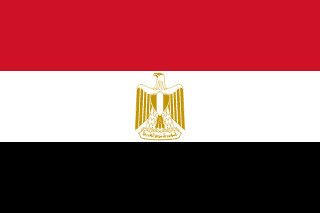 Egypt
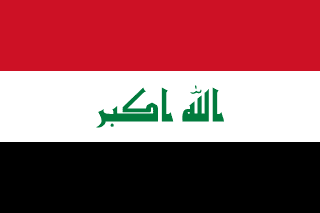 Iraq
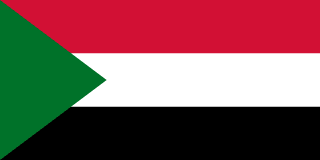 Sudan
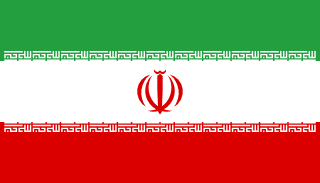 Iran
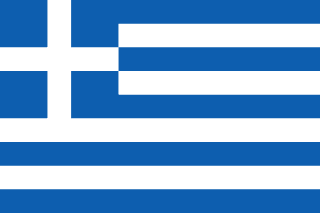 Greece
 North Macedonia
 China
 Italy
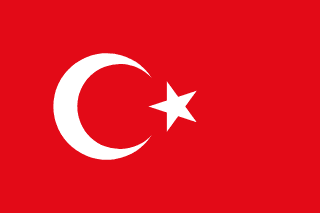 Türkiye
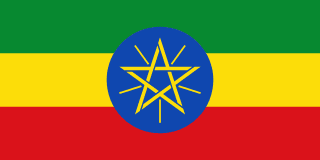 Ethiopia
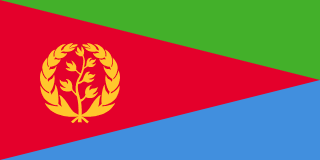 Eritrea
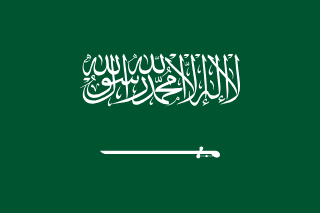 Saudi Arabia
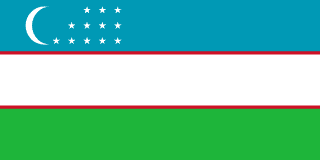 Uzbekistan
 France
 Germany
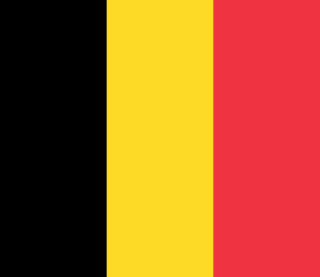 Belgium
 United Kingdom
 Mongolia
 Mali
 Morocco
 South Korea
 Spain
 Poland
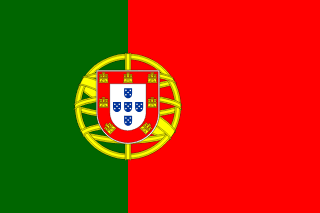 Portugal
 Japan
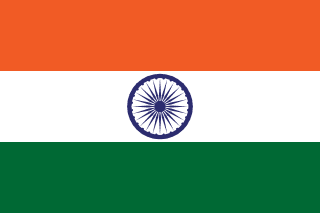 India
 United States
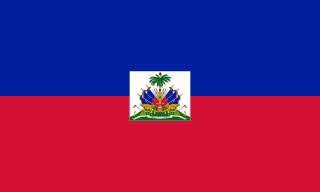 Haiti
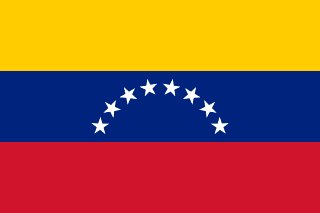 Venezuela
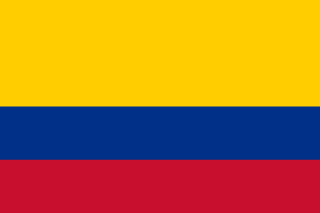 Colombia
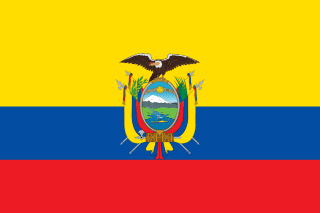 Ecuador
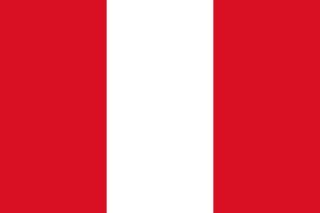 Peru
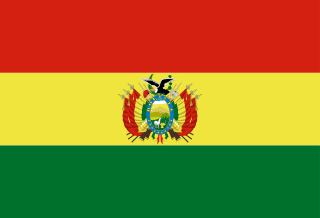 Bolivia
 Canada
 South Africa
 Russia
 Switzerland
 Ghana