History

World History Explorer

Travel through 103 key moments in world history and meet 55 influential people — by region, country or city. Every entry links to its sources.

Explore history by country

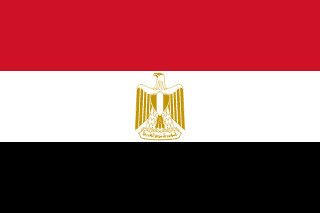
Flag of Egypt

Egypt

Events that took place in the territory of present-day Egypt, including periods before the modern state existed. Country profile · Africa history

  1. Kingdoms and Empires

    Upper and Lower Egypt are unified

    Nile Valley (present-day Egypt)

    Around 3100 BCE the kingdoms of the Nile Valley and Delta came under a single ruler, beginning the Early Dynastic Period of ancient Egypt.

    Why it matters: Unification created one of the world's first large territorial states, which lasted for nearly three thousand years.

    Historical note: The date is approximate, and historians debate whether Narmer or an earlier king first unified Egypt.

    People, places & sources

    People: Narmer

    Sources: Encyclopaedia Britannica · Wikipedia

  2. Ancient Civilizations

    The Great Pyramid of Giza is built

    Giza, Old Kingdom of Egypt (present-day Egypt)

    The largest of the Giza pyramids was built as a tomb for the pharaoh Khufu of the Fourth Dynasty.

    Why it matters: It was the tallest human-made structure in the world for more than 3,800 years and is the only one of the Seven Wonders of the Ancient World still standing.

    Historical note: Construction dates are estimated from the length of Khufu's reign.

    People, places & sources

    People: Khufu,

    Cities: Giza

    Sources: Encyclopaedia Britannica · Wikipedia

  3. Cultural and Religious History

    The temples of Abu Simbel are carved

    Nubia, New Kingdom of Egypt (present-day southern Egypt)

    Two rock-cut temples were carved into a sandstone cliff during the reign of Ramesses II, with four colossal seated statues of the king at the entrance.

    Why it matters: They are among the most famous monuments of ancient Egypt.

    Historical note: Building dates are estimates based on Ramesses II's reign.

    People, places & sources

    People: Ramesses II,

    Sources: UNESCO World Heritage Centre · Wikipedia

  4. Kingdoms and Empires

    Kings of Kush rule Egypt as the 25th Dynasty

    Kingdom of Kush and Egypt (present-day Sudan and Egypt)

    The Kushite king Piye marched north from Napata and took control of Egypt; his successors ruled both lands until Assyrian invasions pushed them south.

    Why it matters: For nearly a century a kingdom based in present-day Sudan ruled one of the largest states of the ancient world.

    Historical note: Exact reign dates of the Kushite kings are debated.

    People, places & sources

    People: Piye,

    Sources: Wikipedia

  5. Wars and Conflicts

    Alexander the Great's campaigns

    From Macedon across Anatolia, Egypt and Persia to the Indus

    Alexander III of Macedon defeated the Achaemenid Persian Empire and led his army as far as the Indus valley before his death in Babylon.

    Why it matters: His conquests spread Greek language and culture across western Asia and Egypt, beginning the Hellenistic period.

    Historical note: Ancient Macedon is not the same as any present-day state; its legacy is claimed in different ways today.

    People, places & sources

    People: Alexander the Great,

    Sources: Wikipedia

  6. Kingdoms and Empires

    The Fatimids found Cairo

    Nile Delta, Fatimid Caliphate (present-day Egypt)

    After conquering Egypt, the Fatimid general Jawhar founded a new walled city named al-Qahira, 'the Victorious'.

    Why it matters: Cairo became the Fatimid capital and is today the largest city in the Arab world; Historic Cairo is a UNESCO World Heritage Site.

    People, places & sources

    People: Jawhar al-Siqilli

    Cities: Cairo

    Sources: Wikipedia

  7. Cultural and Religious History

    Mansa Musa's pilgrimage to Mecca

    From the Mali Empire through Cairo to Mecca (present-day Mali, Egypt and Saudi Arabia)

    The ruler of Mali travelled to Mecca with a large caravan, spending so much gold in Cairo that writers reported its value fell.

    Why it matters: The journey made the wealth of West Africa famous across the Mediterranean world.

    Historical note: Reported sizes of the caravan come from later chroniclers and may be exaggerated.

    People, places & sources

    People: Mansa Musa,

    Cities: Cairo

    Sources: Encyclopaedia Britannica · Wikipedia

  8. Exploration and Geography

    Ibn Battuta's travels

    From Tangier across Africa, the Middle East, Asia and Europe

    The Moroccan scholar travelled for nearly 30 years and later dictated an account of his journeys, known as the Rihla.

    Why it matters: His account is a major source on the 14th-century Islamic world.

    Historical note: Some passages of the Rihla may draw on other writers' accounts.

    People, places & sources

    People: Ibn Battuta,

    Cities: Tangier

    Sources: Encyclopaedia Britannica · Wikipedia

  9. Political and Social Changes

    The Black Death

    Western Asia, North Africa and Europe

    A bubonic plague pandemic spread along trade routes, killing an estimated third or more of Europe's population.

    Why it matters: It caused major social, economic and religious changes in the affected regions.

    Historical note: Death toll estimates vary widely between historians.

    People, places & sources

    Sources: Encyclopaedia Britannica · Wikipedia

  10. Scientific Discoveries

    Champollion deciphers Egyptian hieroglyphs

    Paris (present-day France), using the Rosetta Stone found in Egypt in 1799

    Jean-François Champollion announced that he had worked out how hieroglyphs record sounds, using texts such as the Rosetta Stone.

    Why it matters: It opened ancient Egyptian writing to modern study and founded Egyptology.

    People, places & sources

    People: Jean-François Champollion, Thomas Young

    Cities: Paris

    Sources: Encyclopaedia Britannica · Wikipedia

  11. Exploration and Geography

    The Suez Canal opens

    Isthmus of Suez (present-day Egypt)

    The canal linking the Mediterranean and the Red Sea opened after ten years of construction.

    Why it matters: It created the shortest sea route between Europe and South Asia.

    Historical note: Tens of thousands of Egyptian labourers, many of them conscripted, built the canal.

    People, places & sources

    People: Ferdinand de Lesseps

    Cities: Port Said

    Sources: Encyclopaedia Britannica · Wikipedia

  12. Exploration and Geography

    Tutankhamun's tomb is discovered

    Valley of the Kings, near Luxor (present-day Egypt)

    The archaeologist Howard Carter's team found the steps to the nearly intact tomb of the young pharaoh.

    Why it matters: Its treasures made it the most famous archaeological discovery of the 20th century.

    People, places & sources

    People: Howard Carter, Lord Carnarvon

    Cities: Luxor

    Sources: Wikipedia

  13. Cultural and Religious History

    UNESCO's campaign moves the Abu Simbel temples

    Abu Simbel (present-day Egypt)

    To save them from the reservoir of the Aswan High Dam, the temples were cut into blocks and rebuilt on higher ground.

    Why it matters: The international campaign helped inspire the UNESCO World Heritage Convention of 1972.

    People, places & sources

    Sources: UNESCO World Heritage Centre · Wikipedia

Historical figures associated with Egypt

Khufu

Reigned c. 2589 – 2566 BCE

Pharaoh of Egypt's Fourth Dynasty

Old Kingdom of Egypt (present-day Egypt)

Egypt

Khufu, also known by the Greek name Cheops, ruled during Egypt's Old Kingdom. Little is known about his life beyond the monuments of his reign.

  • Commissioned the Great Pyramid of Giza

Historical note: His reign dates are estimates.

Events: The Great Pyramid of Giza is built (c. 2600 – 2560 BCE)

Sources: Encyclopaedia Britannica · Wikipedia

Ramesses II

c. 1303 – 1213 BCE

Pharaoh of Egypt's Nineteenth Dynasty

New Kingdom of Egypt (present-day Egypt)

Egypt

Ramesses II ruled for about 66 years and is often regarded as one of the most powerful pharaohs. Later Egyptians called him the 'Great Ancestor'.

  • Built the temples of Abu Simbel
  • Concluded one of the earliest known peace treaties, with the Hittites

Historical note: His birth and death years are estimates.

Events: The temples of Abu Simbel are carved (c. 1264 – 1244 BCE)

Sources: Encyclopaedia Britannica · Wikipedia

Piye

Reigned c. 744 – 714 BCE

King of Kush and ruler of Egypt

Kingdom of Kush (present-day Sudan)

SudanEgypt

Piye ruled the Kingdom of Kush from Napata and conquered Egypt, founding what Egyptologists call the 25th Dynasty.

  • Brought Egypt under Kushite rule
  • Recorded his campaign on the Victory Stela at Jebel Barkal

Events: Kings of Kush rule Egypt as the 25th Dynasty (c. 744 – 656 BCE)

Sources: Encyclopaedia Britannica · Wikipedia

How we check history

Every event and profile in this collection is written from established reference works and linked to them: Encyclopaedia Britannica and the UNESCO World Heritage Centre where they cover the topic (links verified through Wikidata), and Wikipedia for every entry. Dates follow those references. When a date is an estimate it is marked “c.” (circa), and when historians disagree — about a date, a number of victims or what an event means — the card says so in a historical note.

Places are described with the name used at the time and the present-day country where they lie today. Linking an event to a present-day country does not mean the people involved shared that modern national identity. If GeoCrown has no verified entry for a place, the explorer says so rather than filling the gap. This is a growing, curated collection; read more about our sources or browse all historical figures.