History

World History Explorer

Travel through 103 key moments in world history and meet 55 influential people — by region, country or city. Every entry links to its sources.

Explore history by country

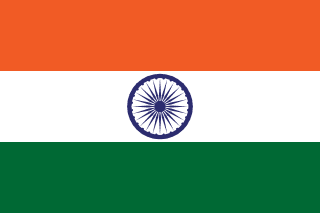
Flag of India

India

Events that took place in the territory of present-day India, including periods before the modern state existed. Country profile · Asia history

  1. Ancient Civilizations

    The Indus Valley Civilisation reaches its mature phase

    Indus River basin (present-day Pakistan and north-west India)
    Planned cities such as Mohenjo-daro and Harappa had grid streets, brick houses and covered drains, and traded as far as Mesopotamia.

    Why it matters: It was one of the three earliest civilisations of the Old World, alongside Egypt and Mesopotamia.

    Historical note: The Indus script has not been deciphered, so much about its society remains uncertain.

    People, places & sources

    Sources: Encyclopaedia Britannica · Wikipedia
  2. Exploration and Geography

    Ibn Battuta's travels

    From Tangier across Africa, the Middle East, Asia and Europe

    The Moroccan scholar travelled for nearly 30 years and later dictated an account of his journeys, known as the Rihla.

    Why it matters: His account is a major source on the 14th-century Islamic world.

    Historical note: Some passages of the Rihla may draw on other writers' accounts.

    People, places & sources

    People: Ibn Battuta,

    Cities: Tangier

    Sources: Encyclopaedia Britannica · Wikipedia

  3. Exploration and Geography

    Vasco da Gama reaches India by sea

    Calicut (present-day Kozhikode, India)

    The Portuguese fleet sailed around the Cape of Good Hope and across the Indian Ocean to the Malabar Coast.

    Why it matters: It opened a direct sea route between Europe and Asia.

    People, places & sources

    People: Vasco da Gama,

    Cities: Kozhikode, Lisbon

    Sources: Encyclopaedia Britannica · Wikipedia

  4. Cultural and Religious History

    The Taj Mahal is built

    Agra, Mughal Empire (present-day India)

    Emperor Shah Jahan commissioned the white marble mausoleum for his wife Mumtaz Mahal.

    Why it matters: It is one of the most celebrated buildings in the world and a UNESCO World Heritage Site.

    Historical note: Sources differ on when the complex was fully completed.

    People, places & sources

    People: Shah Jahan, Mumtaz Mahal

    Cities: Agra

    Sources: Encyclopaedia Britannica · UNESCO World Heritage Centre · Wikipedia

  5. Independence and Nation Formation

    India and Pakistan become independent

    British India (present-day India, Pakistan and Bangladesh)

    British rule ended and British India was partitioned into two independent dominions, India and Pakistan.

    Why it matters: Partition was accompanied by mass migration and communal violence in which hundreds of thousands to about two million people died.

    Historical note: Estimates of the deaths and displacement vary widely.

    People, places & sources

    People: Mahatma Gandhi, Jawaharlal Nehru, Muhammad Ali Jinnah

    Cities: New Delhi, Karachi

    Sources: Encyclopaedia Britannica · Wikipedia

Historical figures associated with India

Shah Jahan

1592 – 1666

Mughal emperor

Mughal Empire (present-day India)

India

Shah Jahan ruled from 1628 until his son Aurangzeb deposed him in 1658.

  • Commissioned the Taj Mahal
  • Built the Red Fort in Delhi

Events: The Taj Mahal is built (c. 1632 – 1653)

Sources: Encyclopaedia Britannica · Wikipedia

Mahatma Gandhi

1869 – 1948

Leader of the Indian independence movement

Porbandar, British India (present-day India)

IndiaSouth Africa

Gandhi first organised civil-rights campaigns in South Africa before leading India's independence movement. He was assassinated in January 1948.

  • Developed non-violent resistance (satyagraha)
  • Led the Salt March (1930)

Events: India and Pakistan become independent (14–15 August 1947)

Sources: Encyclopaedia Britannica · Wikipedia

How we check history

Every event and profile in this collection is written from established reference works and linked to them: Encyclopaedia Britannica and the UNESCO World Heritage Centre where they cover the topic (links verified through Wikidata), and Wikipedia for every entry. Dates follow those references. When a date is an estimate it is marked “c.” (circa), and when historians disagree — about a date, a number of victims or what an event means — the card says so in a historical note.

Places are described with the name used at the time and the present-day country where they lie today. Linking an event to a present-day country does not mean the people involved shared that modern national identity. If GeoCrown has no verified entry for a place, the explorer says so rather than filling the gap. This is a growing, curated collection; read more about our sources or browse all historical figures.