History

World History Explorer

Travel through 103 key moments in world history and meet 55 influential people — by region, country or city. Every entry links to its sources.

Explore history by country

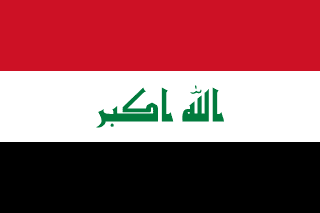
Flag of Iraq

Iraq

Events that took place in the territory of present-day Iraq, including periods before the modern state existed. Country profile · Asia history

  1. Important Inventions

    Cuneiform writing develops in Sumer

    Uruk, Sumer, southern Mesopotamia (present-day Iraq)

    Scribes in the Sumerian city of Uruk began pressing wedge-shaped signs into clay tablets, first to record goods and accounts and later to write language.

    Why it matters: Cuneiform is one of the earliest known writing systems and was used across the ancient Near East for about 3,000 years.

    Historical note: The earliest proto-cuneiform tablets are dated by archaeologists, so the date is an estimate.

    People, places & sources

    Sources: Encyclopaedia Britannica · Wikipedia

  2. Ancient Civilizations

    The Great Ziggurat of Ur is built

    Ur, Third Dynasty of Ur, Mesopotamia (present-day Iraq)

    King Ur-Nammu began a stepped temple platform dedicated to the moon god Nanna, completed by his son Shulgi.

    Why it matters: It is one of the best-preserved ziggurats of ancient Mesopotamia.

    People, places & sources

    People: Ur-Nammu, Shulgi

    Sources: Wikipedia

  3. Political and Social Changes

    The Code of Hammurabi is inscribed

    Babylon, Old Babylonian Empire (present-day Iraq)

    King Hammurabi of Babylon had about 282 laws carved on stone stelae, covering trade, property, family and punishments.

    Why it matters: It is one of the longest and best-preserved law codes of the ancient world.

    People, places & sources

    People: Hammurabi,

    Sources: Encyclopaedia Britannica · Wikipedia

  4. Wars and Conflicts

    Alexander the Great's campaigns

    From Macedon across Anatolia, Egypt and Persia to the Indus

    Alexander III of Macedon defeated the Achaemenid Persian Empire and led his army as far as the Indus valley before his death in Babylon.

    Why it matters: His conquests spread Greek language and culture across western Asia and Egypt, beginning the Hellenistic period.

    Historical note: Ancient Macedon is not the same as any present-day state; its legacy is claimed in different ways today.

    People, places & sources

    People: Alexander the Great,

    Sources: Wikipedia

  5. Kingdoms and Empires

    The Abbasid caliph al-Mansur founds Baghdad

    Banks of the Tigris, Abbasid Caliphate (present-day Iraq)

    The new round city, called Madinat al-Salam ('City of Peace'), was built as the capital of the Abbasid Caliphate.

    Why it matters: Baghdad became one of the largest cities in the world and a centre of scholarship and trade.

    Historical note: Construction ran from 762 to about 766.

    People, places & sources

    People: Al-Mansur,

    Cities: Baghdad

    Sources: Wikipedia

  6. Scientific Discoveries

    Al-Khwarizmi writes his book on algebra

    Baghdad, Abbasid Caliphate (present-day Iraq)

    The scholar Muhammad ibn Musa al-Khwarizmi wrote a treatise on solving equations; the word 'algebra' comes from 'al-jabr' in its title.

    Why it matters: His works helped spread Hindu–Arabic numerals, and the word 'algorithm' derives from his name.

    People, places & sources

    People: Muhammad ibn Musa al-Khwarizmi,

    Cities: Baghdad

    Sources: Encyclopaedia Britannica · Wikipedia

Historical figures associated with Iraq

Hammurabi

c. 1810 – c. 1750 BCE

King of the Old Babylonian Empire

Babylon (present-day Iraq)

Iraq

Hammurabi was the sixth king of the First Babylonian dynasty, reigning about 1792–1750 BCE. He turned Babylon from a small city-state into the centre of an empire.

  • Expanded Babylon to rule most of Mesopotamia
  • Issued the Code of Hammurabi

Events: The Code of Hammurabi is inscribed (c. 1754 BCE)

Sources: Encyclopaedia Britannica · Wikipedia

Muhammad ibn Musa al-Khwarizmi

c. 780 – c. 850 CE

Mathematician, astronomer and geographer

Baghdad, Abbasid Caliphate; family origins in Khwarazm (Central Asia)

IraqUzbekistan

Al-Khwarizmi worked at the House of Wisdom in Baghdad. His books were later translated into Latin and studied in Europe.

  • Wrote the founding text of algebra
  • Spread Hindu–Arabic numerals

Events: Al-Khwarizmi writes his book on algebra (c. 813 – 833 CE)

Sources: Encyclopaedia Britannica · Wikipedia

How we check history

Every event and profile in this collection is written from established reference works and linked to them: Encyclopaedia Britannica and the UNESCO World Heritage Centre where they cover the topic (links verified through Wikidata), and Wikipedia for every entry. Dates follow those references. When a date is an estimate it is marked “c.” (circa), and when historians disagree — about a date, a number of victims or what an event means — the card says so in a historical note.

Places are described with the name used at the time and the present-day country where they lie today. Linking an event to a present-day country does not mean the people involved shared that modern national identity. If GeoCrown has no verified entry for a place, the explorer says so rather than filling the gap. This is a growing, curated collection; read more about our sources or browse all historical figures.