History

World History Explorer

Travel through 103 key moments in world history and meet 55 influential people — by region, country or city. Every entry links to its sources.

Explore history by country

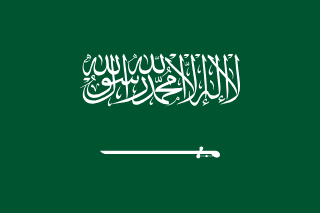
Flag of Saudi Arabia

Saudi Arabia

Events that took place in the territory of present-day Saudi Arabia, including periods before the modern state existed. Country profile · Asia history

  1. Cultural and Religious History

    The Hijra: Muhammad migrates from Mecca to Medina

    Mecca and Yathrib (Medina), Arabia (present-day Saudi Arabia)

    The Prophet Muhammad and his followers moved from Mecca to Yathrib, later known as Medina, where the first Muslim community was organised.

    Why it matters: The year of the Hijra became year 1 of the Islamic (Hijri) calendar.

    People, places & sources

    People: Muhammad,

    Cities: Mecca, Medina

    Sources: Encyclopaedia Britannica · Wikipedia

  2. Cultural and Religious History

    Mansa Musa's pilgrimage to Mecca

    From the Mali Empire through Cairo to Mecca (present-day Mali, Egypt and Saudi Arabia)

    The ruler of Mali travelled to Mecca with a large caravan, spending so much gold in Cairo that writers reported its value fell.

    Why it matters: The journey made the wealth of West Africa famous across the Mediterranean world.

    Historical note: Reported sizes of the caravan come from later chroniclers and may be exaggerated.

    People, places & sources

    People: Mansa Musa,

    Cities: Cairo

    Sources: Encyclopaedia Britannica · Wikipedia

  3. Exploration and Geography

    Ibn Battuta's travels

    From Tangier across Africa, the Middle East, Asia and Europe

    The Moroccan scholar travelled for nearly 30 years and later dictated an account of his journeys, known as the Rihla.

    Why it matters: His account is a major source on the 14th-century Islamic world.

    Historical note: Some passages of the Rihla may draw on other writers' accounts.

    People, places & sources

    People: Ibn Battuta,

    Cities: Tangier

    Sources: Encyclopaedia Britannica · Wikipedia

  4. Independence and Nation Formation

    Abdulaziz Al Saud captures Riyadh

    Riyadh, Najd (present-day Saudi Arabia)

    Abdulaziz ibn Abdul Rahman Al Saud retook Riyadh, his family's former seat, with a small force.

    Why it matters: It began the campaigns that led to the unification of Saudi Arabia.

    People, places & sources

    People: King Abdulaziz (Ibn Saud),

    Cities: Riyadh

    Sources: Wikipedia

  5. Independence and Nation Formation

    The Kingdom of Saudi Arabia is proclaimed

    Riyadh (present-day Saudi Arabia)

    King Abdulaziz united his domains of Najd and the Hejaz as the Kingdom of Saudi Arabia.

    Why it matters: 23 September is celebrated as Saudi National Day.

    People, places & sources

    People: King Abdulaziz (Ibn Saud),

    Cities: Riyadh

    Sources: Wikipedia

Historical figures associated with Saudi Arabia

Muhammad

c. 570 – 632 CE

Prophet of Islam

Mecca and Medina, Arabia (present-day Saudi Arabia)

Saudi Arabia

Born in Mecca, Muhammad is regarded by Muslims as the final prophet. After the Hijra to Medina in 622 he led the early Muslim community until his death.

  • Founded the religion of Islam
  • United much of Arabia

Events: The Hijra: Muhammad migrates from Mecca to Medina (622 CE)

Sources: Encyclopaedia Britannica · Wikipedia

King Abdulaziz (Ibn Saud)

c. 1875 – 1953

Founder and first king of Saudi Arabia

Najd, Arabia (present-day Saudi Arabia)

Saudi Arabia

Abdulaziz grew up partly in exile in Kuwait and spent three decades uniting the regions that became Saudi Arabia.

  • Recaptured Riyadh in 1902
  • Proclaimed the Kingdom of Saudi Arabia in 1932

Historical note: Sources give his birth year as 1875 or 1876.

Events: Abdulaziz Al Saud captures Riyadh (15 January 1902) · The Kingdom of Saudi Arabia is proclaimed (23 September 1932)

Sources: Encyclopaedia Britannica · Wikipedia

How we check history

Every event and profile in this collection is written from established reference works and linked to them: Encyclopaedia Britannica and the UNESCO World Heritage Centre where they cover the topic (links verified through Wikidata), and Wikipedia for every entry. Dates follow those references. When a date is an estimate it is marked “c.” (circa), and when historians disagree — about a date, a number of victims or what an event means — the card says so in a historical note.

Places are described with the name used at the time and the present-day country where they lie today. Linking an event to a present-day country does not mean the people involved shared that modern national identity. If GeoCrown has no verified entry for a place, the explorer says so rather than filling the gap. This is a growing, curated collection; read more about our sources or browse all historical figures.