History

World History Explorer

Travel through 103 key moments in world history and meet 55 influential people — by region, country or city. Every entry links to its sources.

Explore history by country

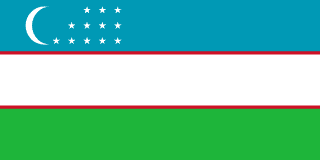
Flag of Uzbekistan

Uzbekistan

Events that took place in the territory of present-day Uzbekistan, including periods before the modern state existed. Country profile · Asia history

  1. Modern World History

    The Soviet Union is dissolved

    Moscow and the former Soviet republics

    The Supreme Soviet formally dissolved the USSR, and its fifteen republics became independent states.

    Why it matters: It ended the Cold War and redrew the map of Europe and Asia.

    People, places & sources

    People: Mikhail Gorbachev

    Cities: Moscow

    Sources: Encyclopaedia Britannica · Wikipedia

Historical figures associated with Uzbekistan

Muhammad ibn Musa al-Khwarizmi

c. 780 – c. 850 CE

Mathematician, astronomer and geographer

Baghdad, Abbasid Caliphate; family origins in Khwarazm (Central Asia)

IraqUzbekistan

Al-Khwarizmi worked at the House of Wisdom in Baghdad. His books were later translated into Latin and studied in Europe.

  • Wrote the founding text of algebra
  • Spread Hindu–Arabic numerals

Events: Al-Khwarizmi writes his book on algebra (c. 813 – 833 CE)

Sources: Encyclopaedia Britannica · Wikipedia

Ibn Sina (Avicenna)

c. 980 – 1037 CE

Physician and philosopher

Born near Bukhara (present-day Uzbekistan); worked in Persia (present-day Iran)

UzbekistanIran

Ibn Sina was a Persian polymath who served as physician and adviser at several courts. His works influenced medicine and philosophy for centuries.

  • Wrote The Canon of Medicine
  • Wrote The Book of Healing, a philosophical encyclopedia

Events: Ibn Sina completes The Canon of Medicine (c. 1025)

Sources: Encyclopaedia Britannica · Wikipedia

How we check history

Every event and profile in this collection is written from established reference works and linked to them: Encyclopaedia Britannica and the UNESCO World Heritage Centre where they cover the topic (links verified through Wikidata), and Wikipedia for every entry. Dates follow those references. When a date is an estimate it is marked “c.” (circa), and when historians disagree — about a date, a number of victims or what an event means — the card says so in a historical note.

Places are described with the name used at the time and the present-day country where they lie today. Linking an event to a present-day country does not mean the people involved shared that modern national identity. If GeoCrown has no verified entry for a place, the explorer says so rather than filling the gap. This is a growing, curated collection; read more about our sources or browse all historical figures.